
Share this article
Follow us on Linkedin
SAP Integrated Business Planning (IBP) continues to evolve, offering businesses advanced tools to navigate the complexities of modern supply chains. This article explores the top five highlights of the 2602 release, showcasing features designed to elevate your planning agility and execution.
1. Location Product Substitution in HPA
In the 2602 release, Location Product Substitution has achieved full coverage across planning modes, harmonizing mid-to-long-term strategic planning (Time-Series) with short-term tactical execution (Order-Based).
- In Time-Series (TS) Scenarios (Strategic Horizon): Supported within the I_SAPIBP2 template, this feature leverages heuristics and optimizers to focus on macro-level lifecycle management. For example, when a company plans to phase out an old product line while introducing an upgraded version, planners can set a “use-up phase.” The system automatically prioritizes consuming every unit of the legacy stock to meet forecasted demand before triggering any procurement for the new model. This approach minimizes inventory write-offs and scrap costs at a strategic level.
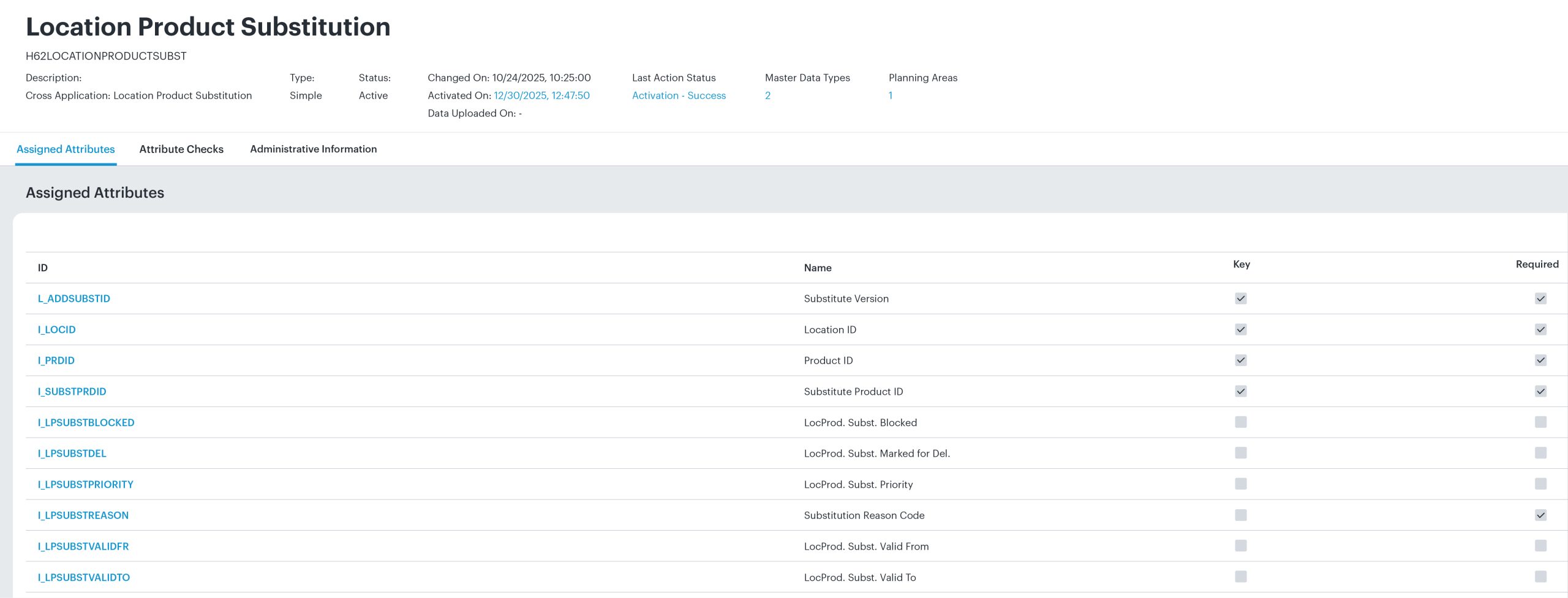
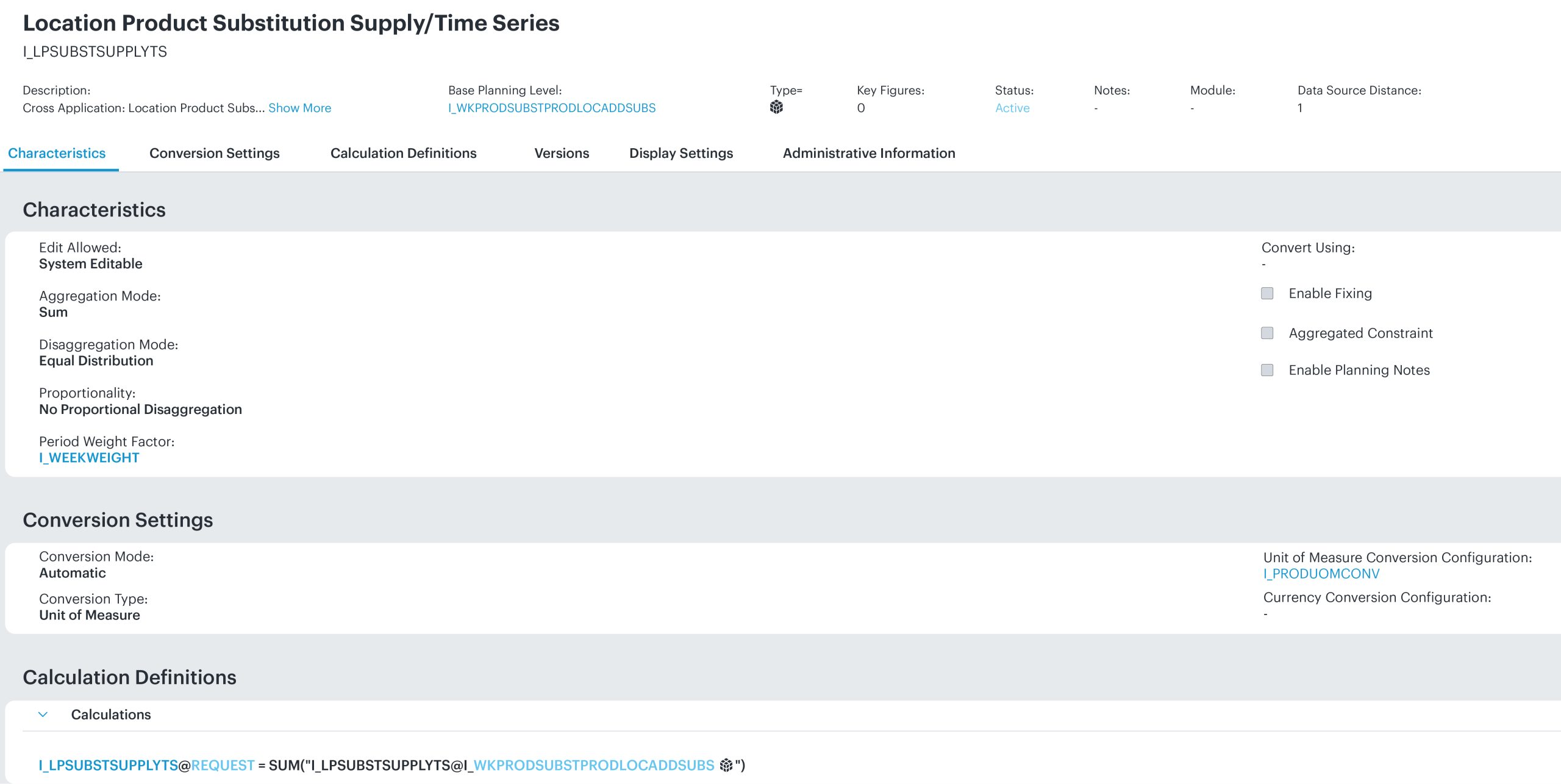
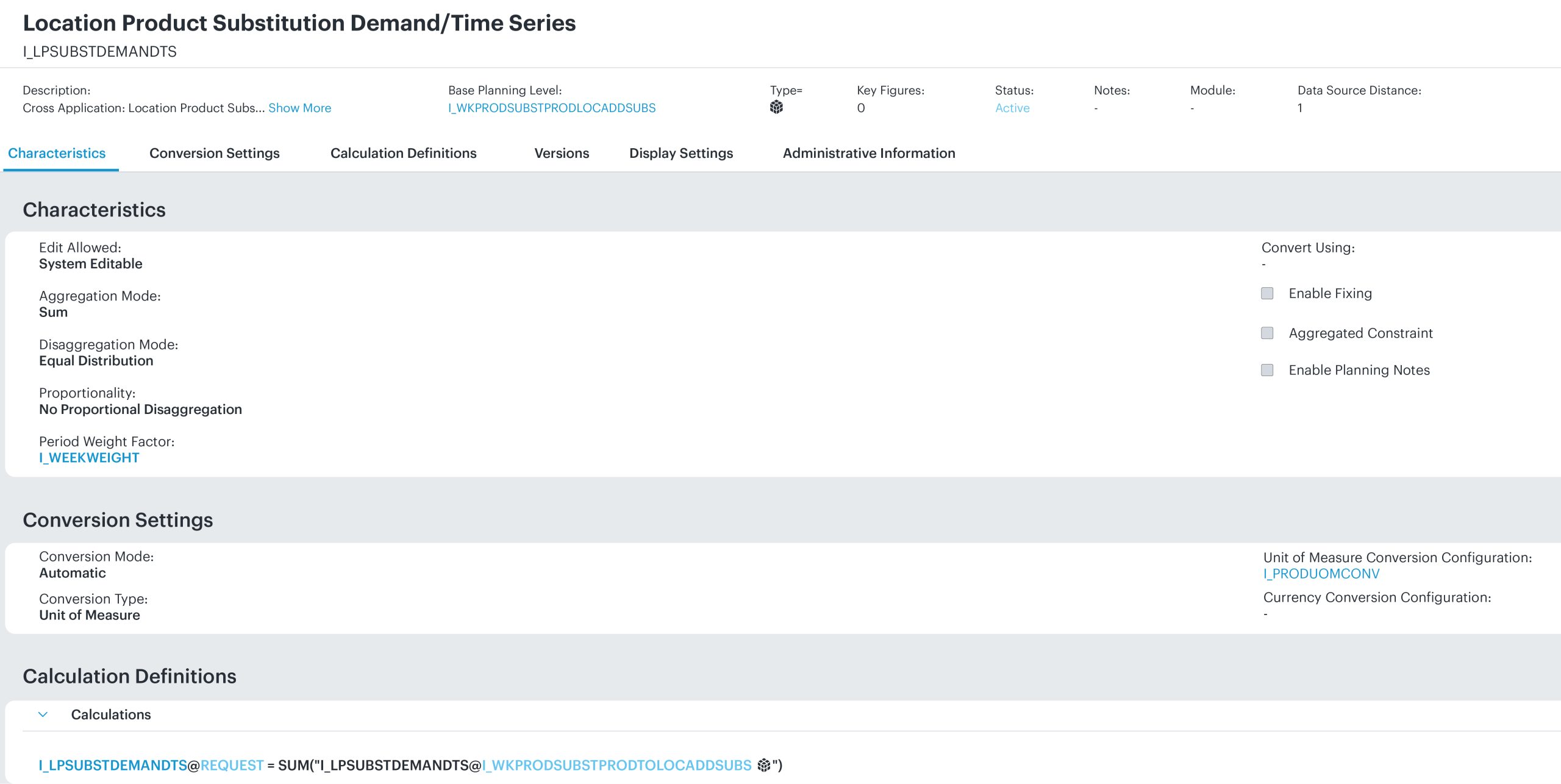
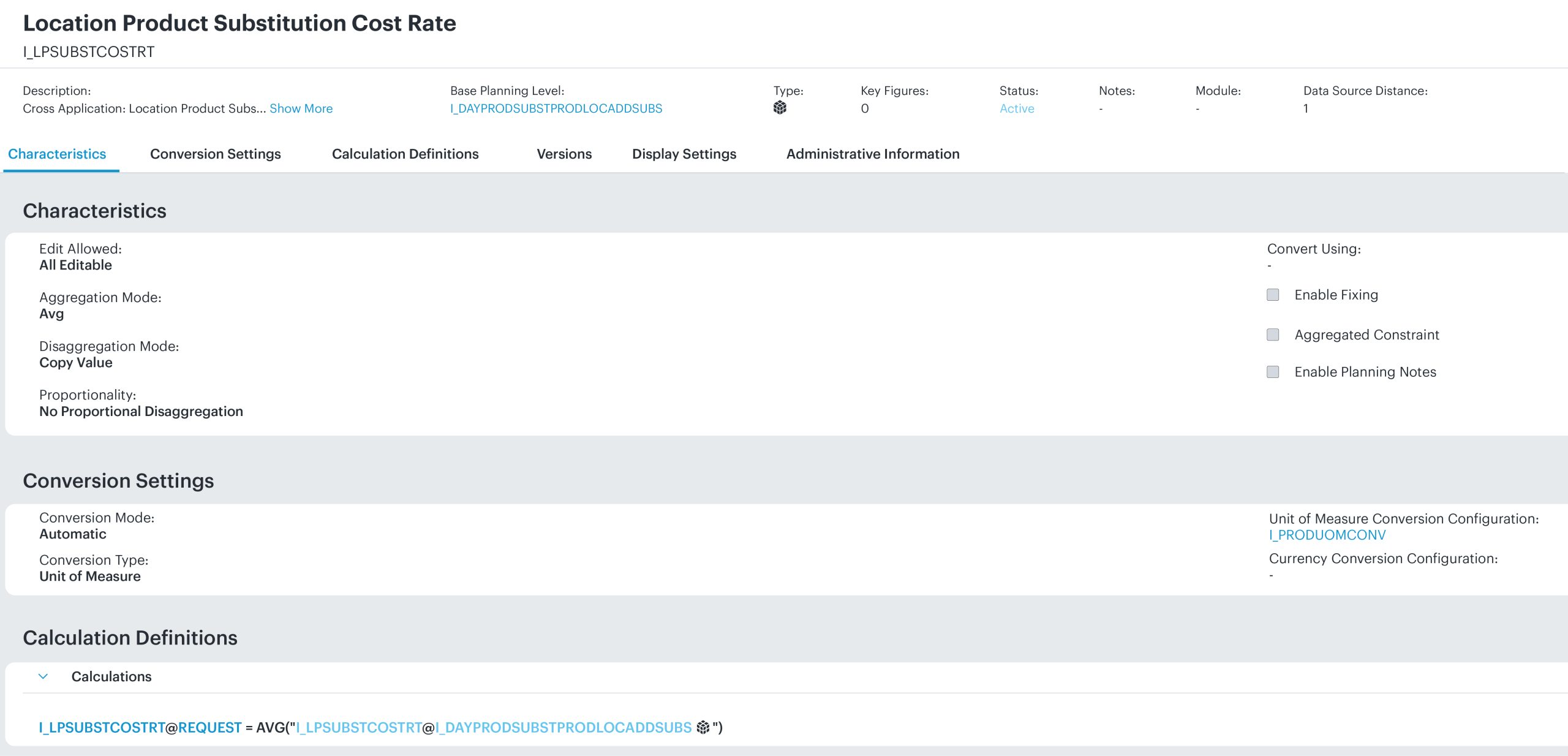
- In Order-Based Planning (OBP) Scenarios (Operational Execution): Deeply embedded into the fulfillment process via Real-Time Integration (RTI), this feature focuses on immediate stock-out responses. Imagine a scenario where a high-demand product suddenly goes out of stock at a specific warehouse. The OBP logic can instantly identify and fulfill the sales order using available substitute stock at that same location based on pre-defined master data. This “real-time switch” ensures that order delivery remains uninterrupted even under supply constraints, significantly boosting customer satisfaction.
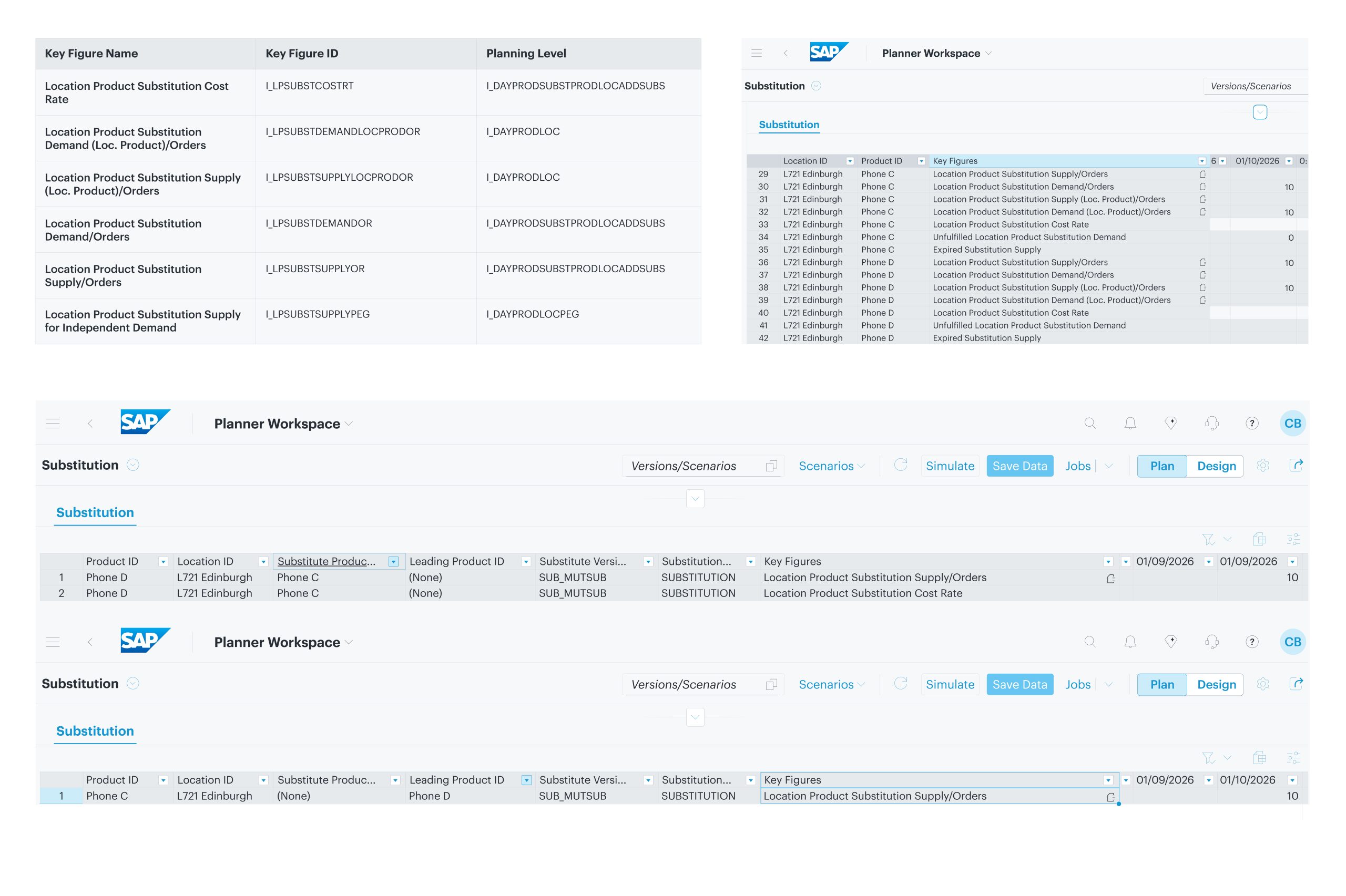
The following key figures show results if product substitution has taken place during planning:
2. Multi-Level Subcontracting
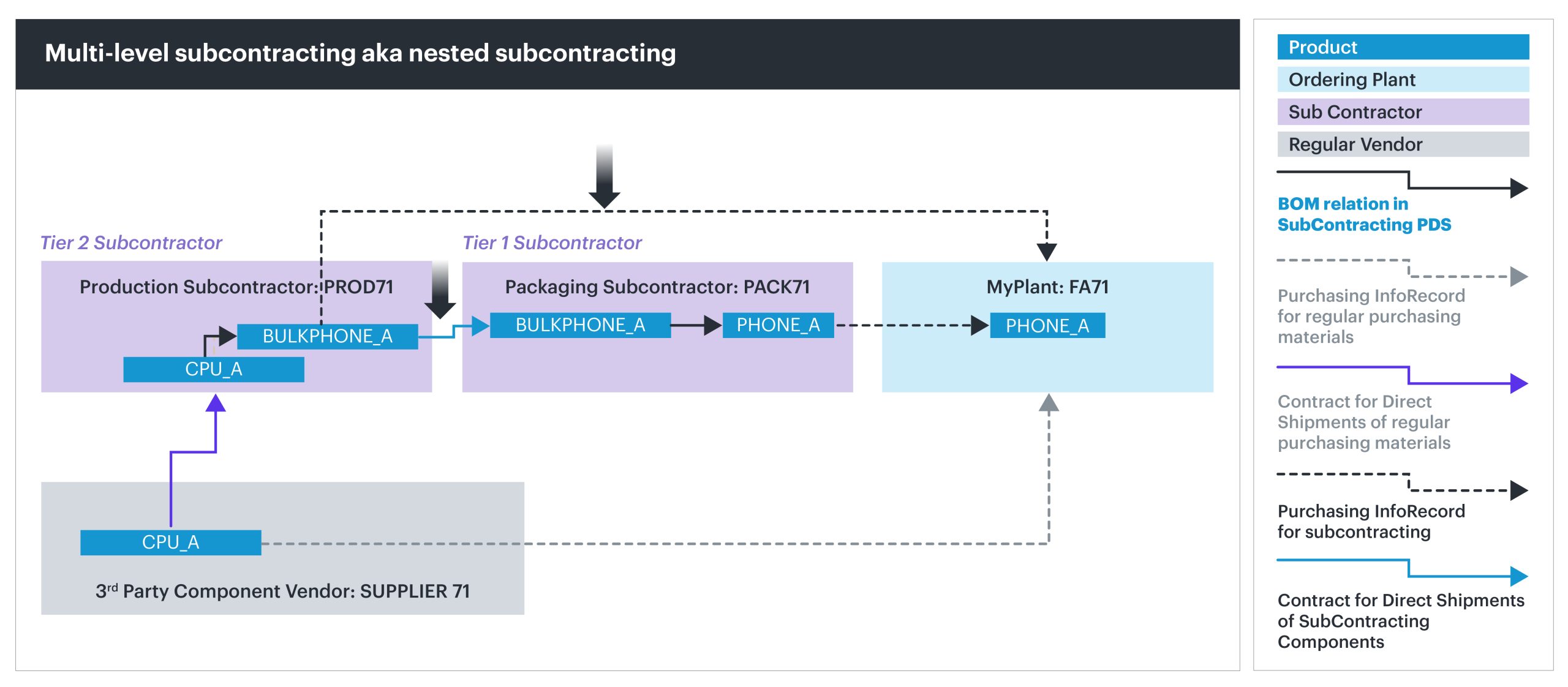
To support increasingly complex global supply networks, IBP now enables multi-level or “nested” subcontracting. This feature manages scenarios where a component flows directly between external partners—for instance, a base component moving from a casting subcontractor directly to a precision-machining vendor—without ever returning to the main plant. By establishing contract-based transportation lanes between subcontractor locations, IBP provides end-to-end visibility into these external movements. This ensures that component requirements and lead times are accurately tracked across every tier of the outsourced production process.
3. Deployment Conversion Heuristic
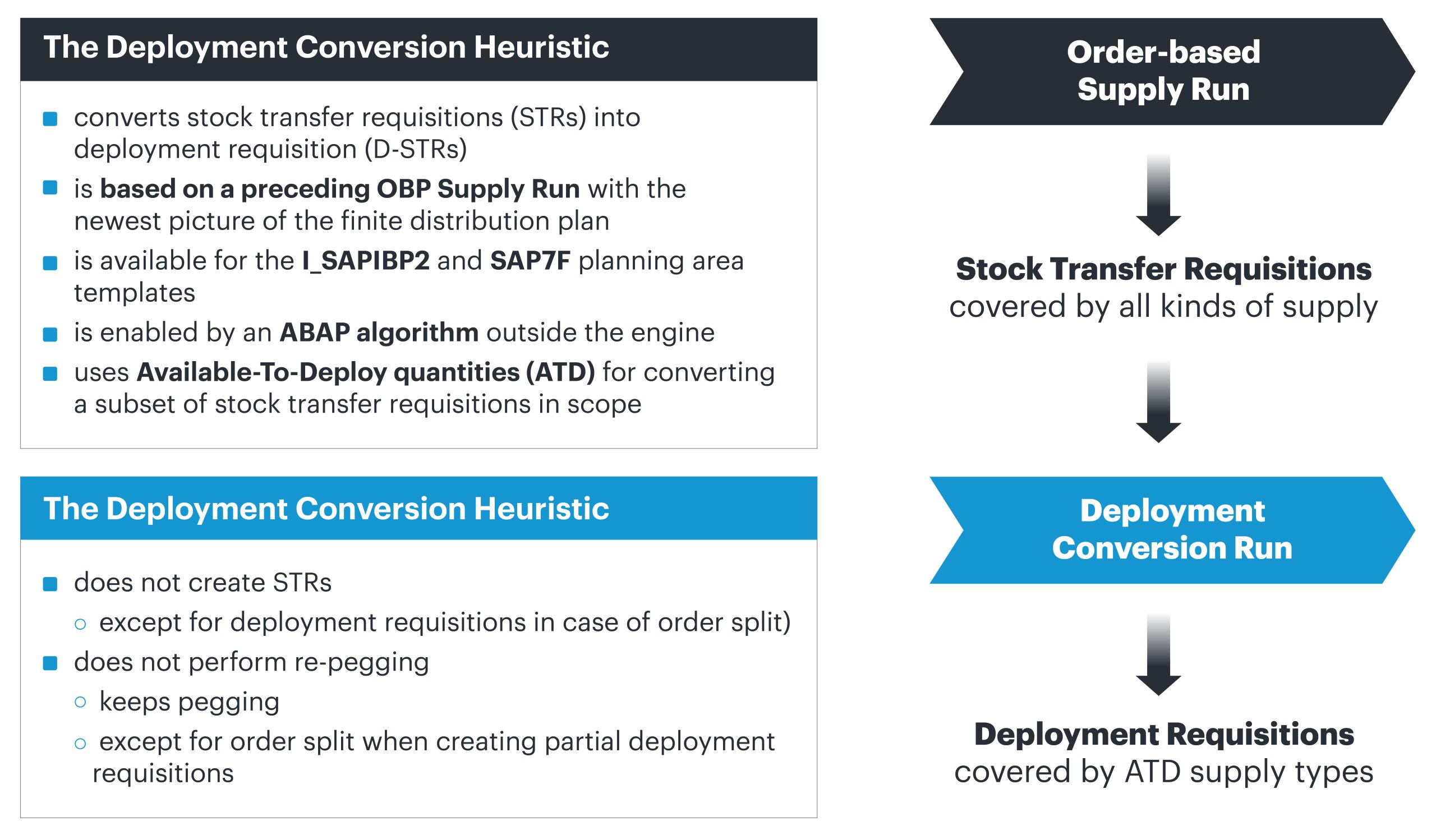
The new Deployment Conversion Heuristic acts as a critical link between planning and execution by converting stock transfer requisitions (STRs) into deployment requisitions (D-STRs) based on real-time finite supply. When faced with supply shortages at a central hub, the algorithm uses Available-to-Deploy (ATD) quantities to prioritize which downstream distribution centers receive stock first based on urgency and priority. It can even perform “order splits,” converting only the portion of a requisition that can be currently fulfilled. This ensures that every shipment leaving the warehouse is validated against the most current supply constraints.
4. MRO AI-assist
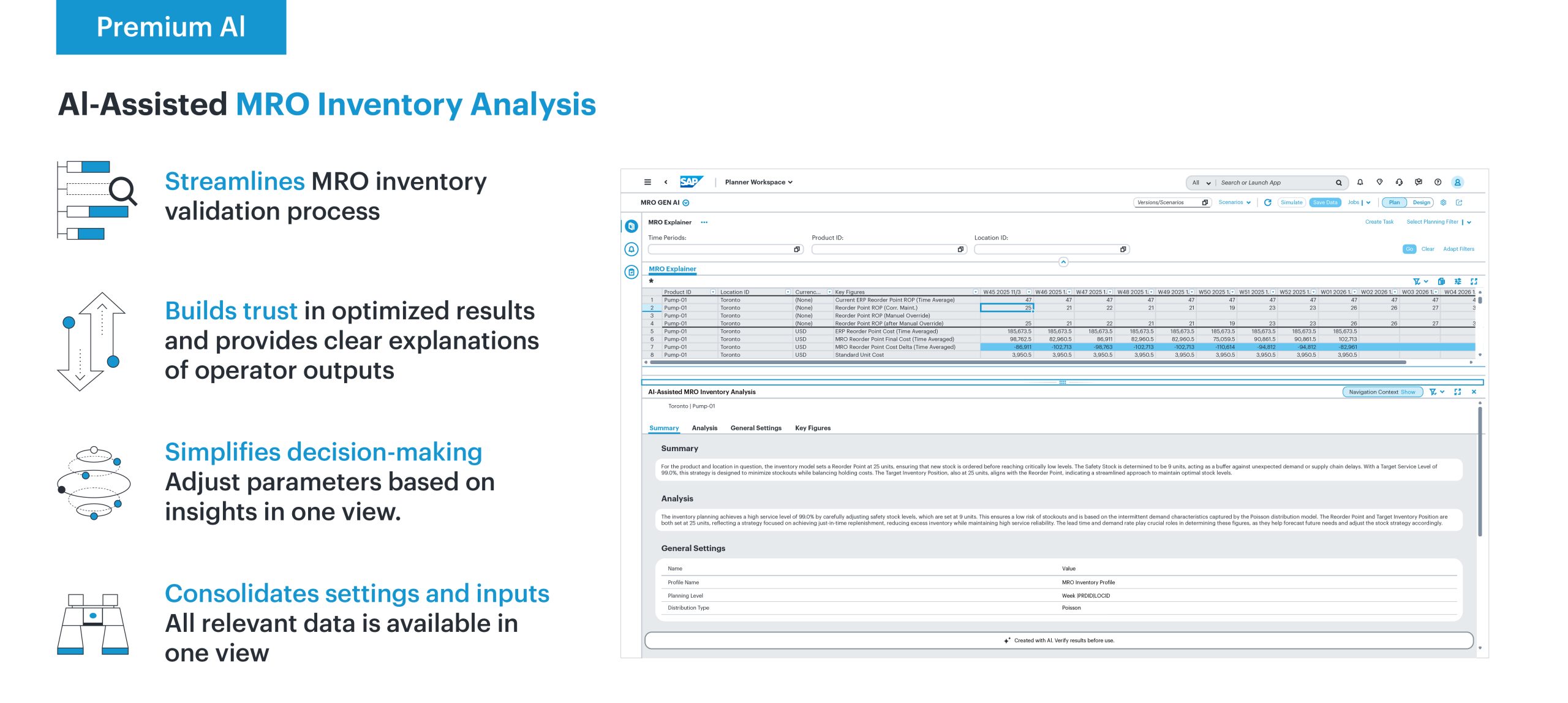
Inventory optimization for Maintenance, Repair, and Operations (MRO) is often complex, but the new GenAI-assist simplifies this by providing natural-language interpretations of system outputs. Instead of manually auditing complex formulas, a planner can simply ask the AI why a specific spare part’s safety stock has spiked; the AI might explain that a recent increase in supplier lead-time variability for that critical component necessitated the buffer. By consolidating these insights within the Planner Workspace, AI-assist demystifies the “black box” of optimization, enabling planners to make faster, more confident decisions for intermittent demand parts.
5. Harmonized Scenario Management (HSM)
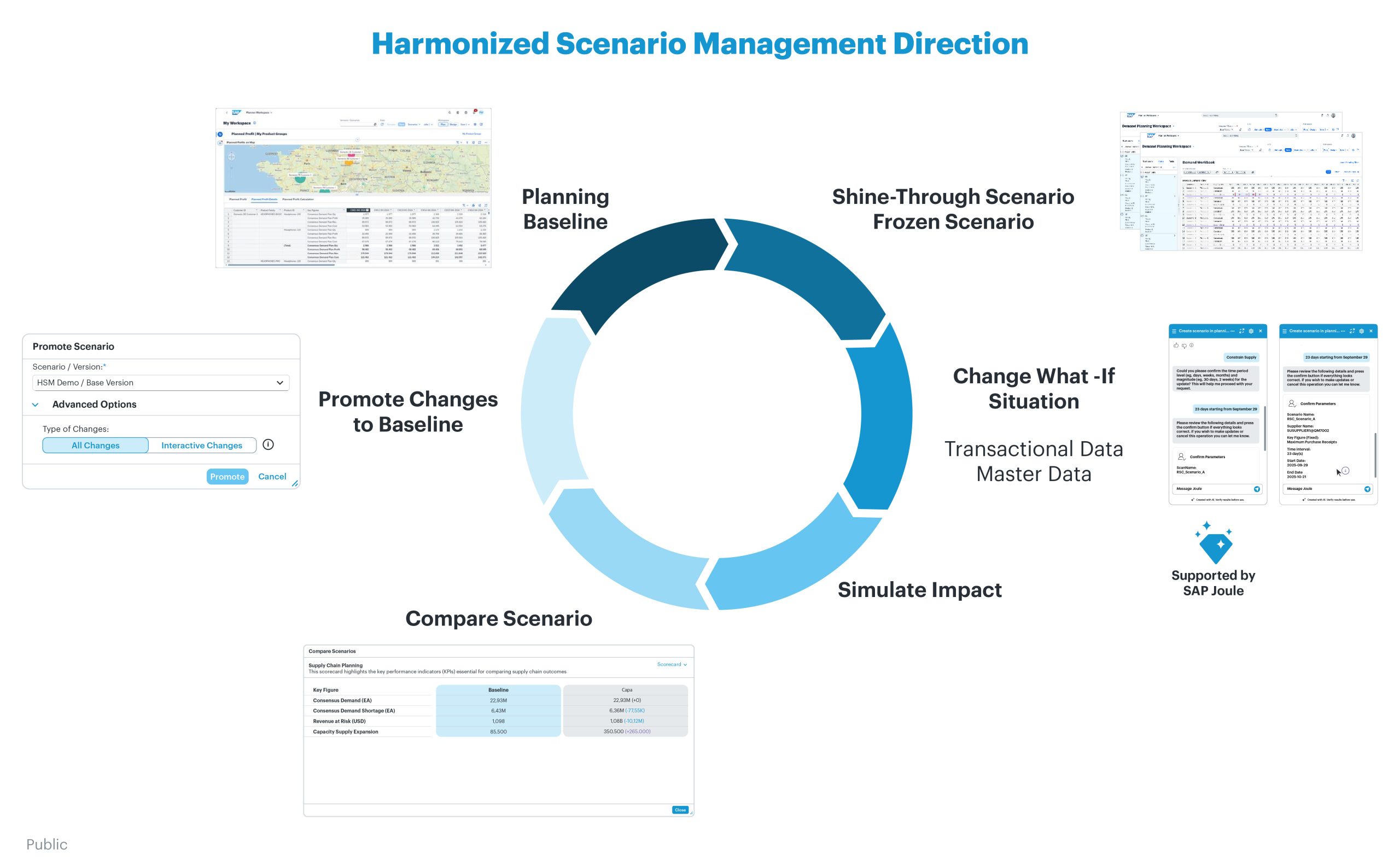
Harmonized Scenario Management (HSM) synchronizes the lifecycle of scenarios across order-based and time-series planning, featuring a “Shine-Through” capability that ensures simulations are always grounded in reality. For example, if a planner is simulating a mid-term promotion but a sudden stock-out occurs in the baseline, the “Shine-Through” logic automatically reflects this inventory drop within the simulation without requiring a manual sync. When finalized, the planner can then “promote” only their specific promotional adjustments back to the baseline, ensuring that strategic simulations are always informed by the latest operational data.
You can check the detailed descriptions of each change in What’s New Viewer.
Please note that this reflects the current state of planning and may be changed by SAP at any time. For the final delivered changes, refer to the official SAP Community newsletter.