Article

Share this article
Follow us on Linkedin
In an era where digital transformation is accelerating faster than organizations can adapt, many businesses find themselves facing an uncomfortable truth: while technologies such as SAP Signavio and SAP LeanIX offer unprecedented transparency and analytical power, the ability to translate these insights into real business value is far from guaranteed. Modern tooling is a prerequisite. The tools reveal what needs to change, but not necessarily how to orchestrate the journey.
This is where a Center of Excellence (CoE) for Business Process Management (BPM) and Enterprise Architecture (EA) becomes an essential strategic asset. A well-designed CoE creates the organizational alignment, governance, and enablement that modern enterprises require to navigate complexity, accelerate transformation, and embed operational excellence at scale and sustainable.
Why a BPM & EA CoE Matters More Than Ever.
Organizations today are struggling not because they lack data or powerful systems, but because they lack alignment. Research consistently highlights three dominant challenges : teams operate effectively within their departments but fail to align across the enterprise; transformation strategies are poorly communicated, leaving employees unsure how change will benefit them; and enablement efforts are insufficient, resulting in low adoption and a lack of capability to sustain improvements. These barriers prevent even the best transformation initiatives from achieving their intended outcomes.
A CoE addresses these issues by creating a central, unifying body that sets standards, fosters collaboration, and ensures that business and IT move together in the same direction. Its purpose is not to add another layer of governance, but to eliminate friction—removing duplicated efforts, clarifying priorities, and providing a shared language to understand processes, capabilities, technologies, and their interdependencies.
1 McKinsey & Company (2008). Creating organizational transformations.
arXiv (2026). Barriers to scaling transformations: Organizational misalignment vs. technology constraints
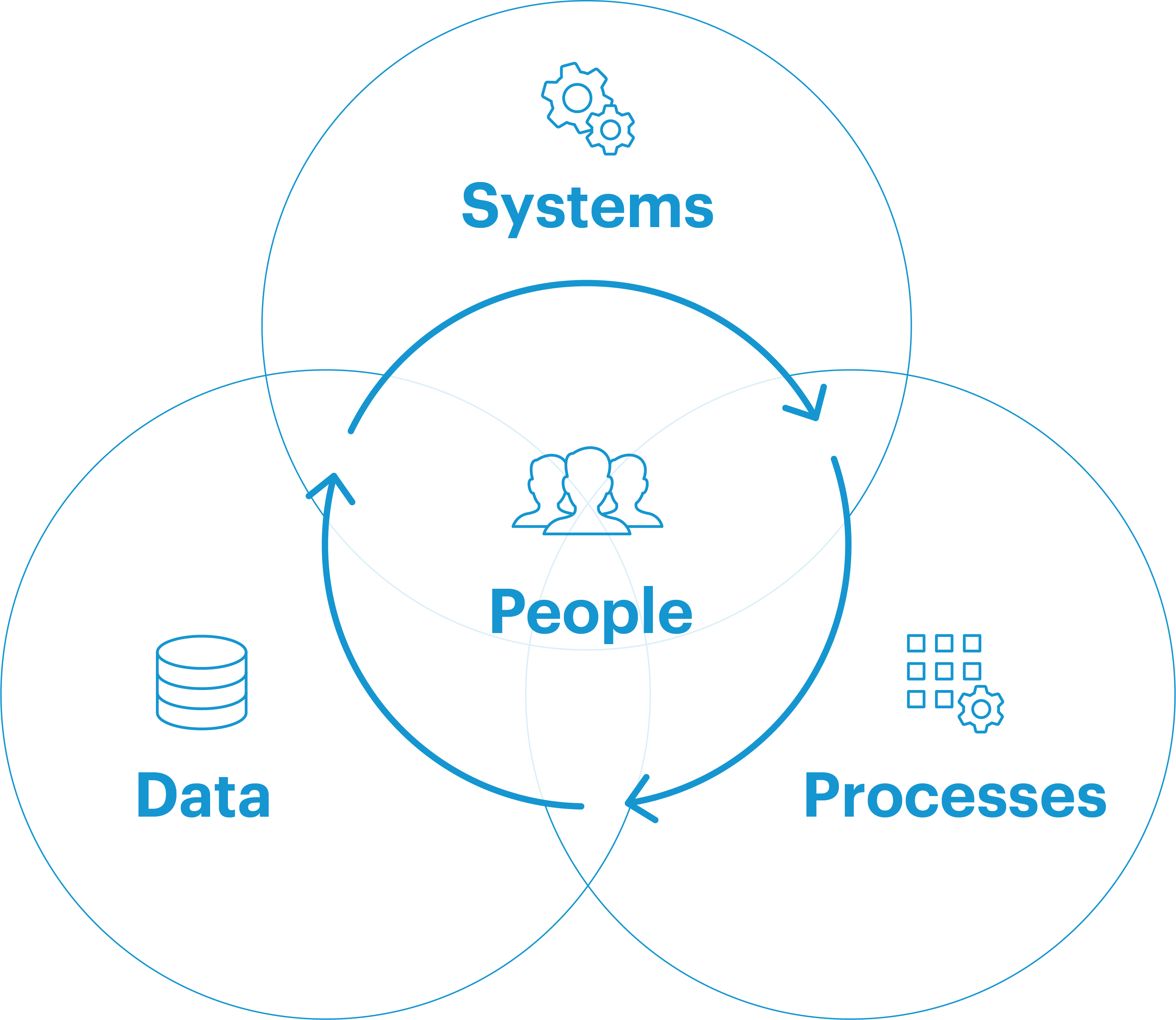
Crucially, a CoE acts as a deliberate bridge between business and IT. While it is increasingly argued—rightly—that these domains should no longer be treated as separate, and that there is no place for a “them and us” mindset, this view often confuses aspiration with reality. In most organizations, business and IT have not yet converged into a single, cohesive operating model; they still differ in priorities, language, incentives, and cadence.
A CoE does not ignore this reality—it addresses it headon. By explicitly acknowledging the gap and institutionalizing collaboration, the CoE becomes a catalyst for integration. It replaces accidental alignment with intentional design, accelerating the journey toward a truly unified organization where business and technology operate as one. Through SAP Signavio, the organization gains insight into its processes, performance gaps, and operational workflows. Through SAP LeanIX, it gains a clear architectural lens—a “Duplo™ model” of the enterprise—that maps capabilities, applications, technologies, data objects, platforms, and dependencies. Together, the tools provide a comprehensive digital twin of the enterprise, and the CoE becomes the vehicle to interpret, operationalize, and institutionalize this intelligence.
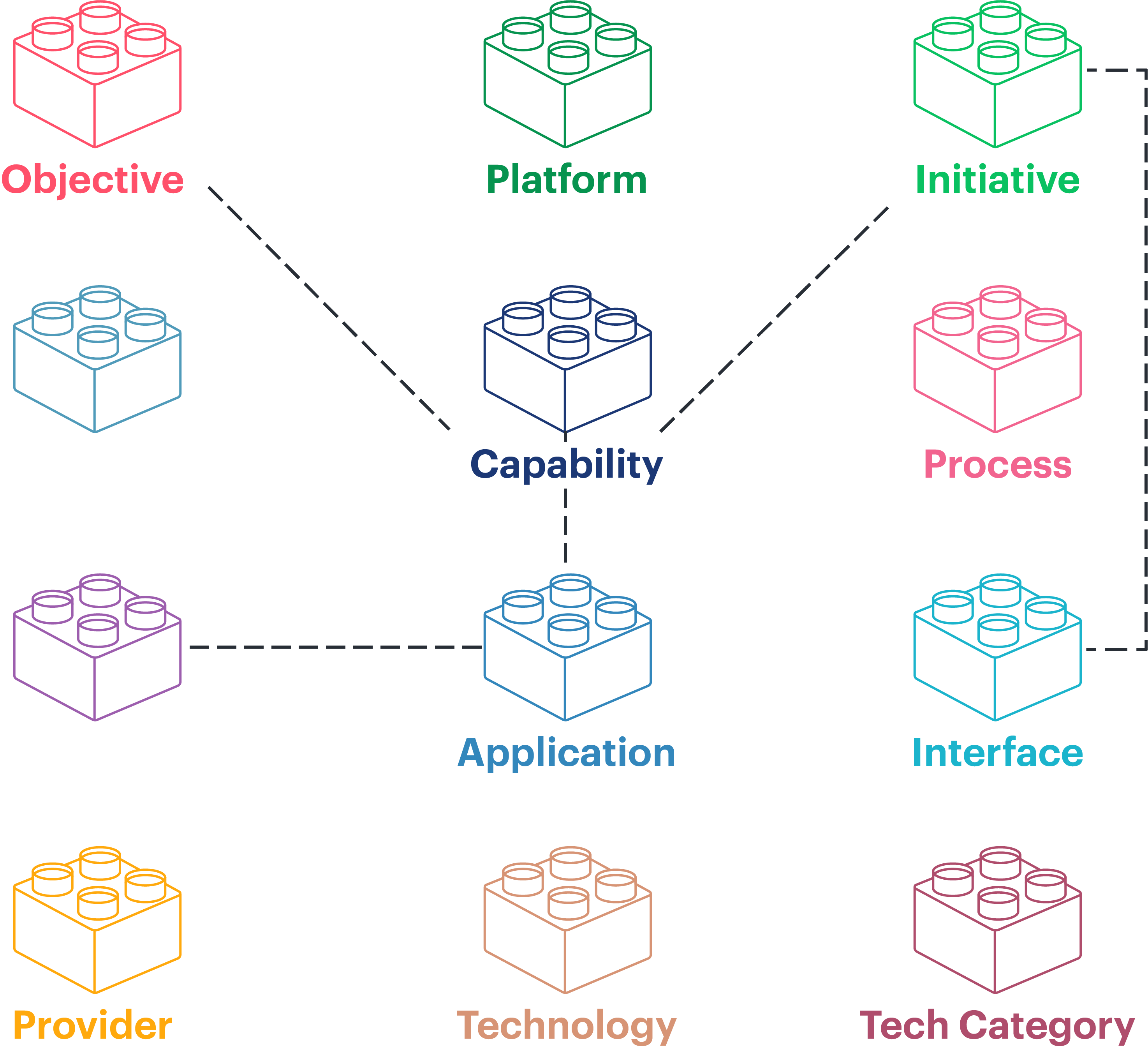
With this combined view, strategy becomes executable. A CoE ensures that a strategic ambition is not an isolated statement but a living blueprint, reflected through processes, applications, change initiatives, and technology choices. It enables organizations to understand how a change in one domain affects the others, reducing transformation risk and promoting informed decision making.
The Structure of an Effective CoE
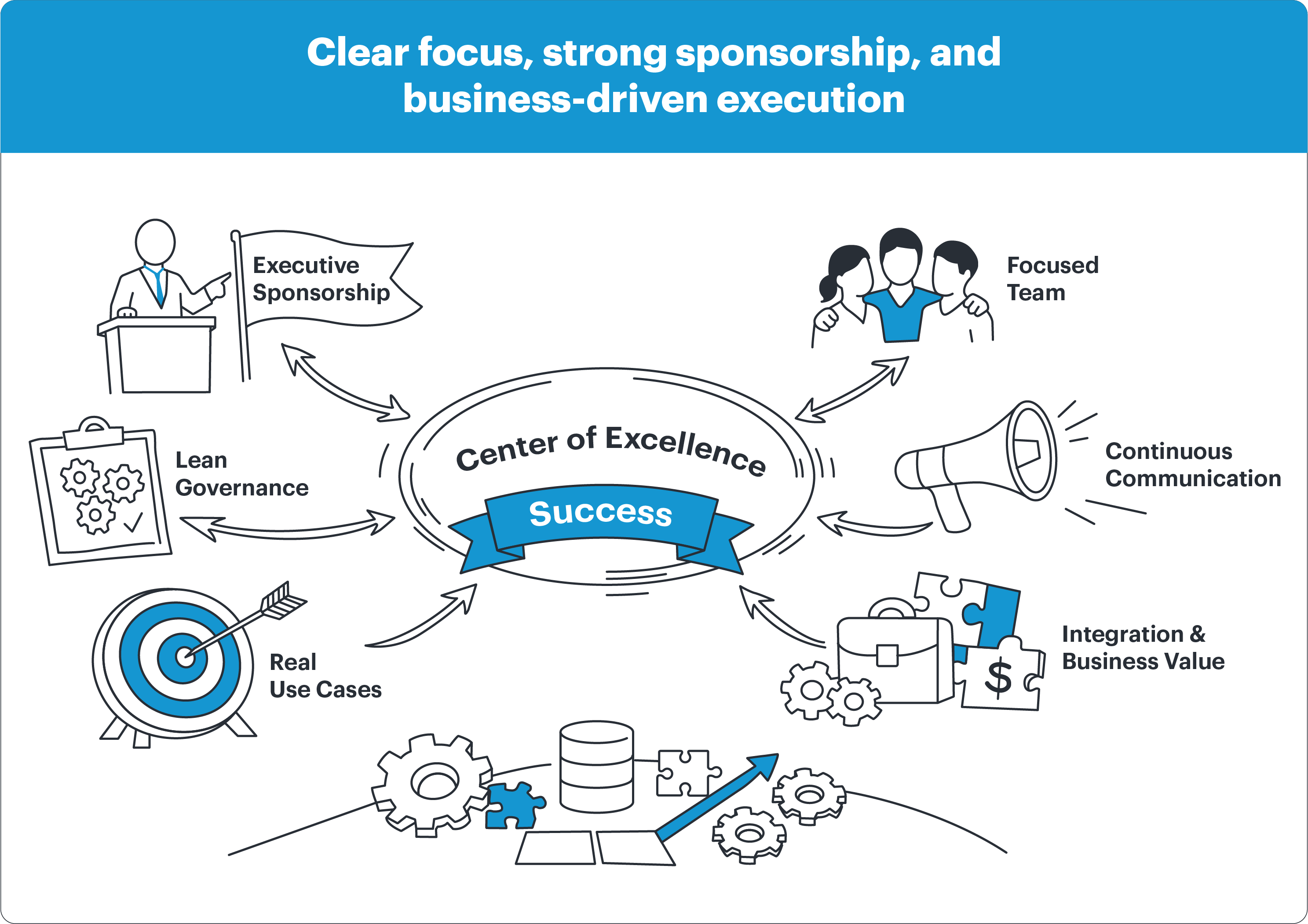
A BPM & EA CoE is built on a foundation of clear governance and strong organizational positioning. Executive sponsorship is essential, not only to provide authority and direction but to ensure that transformation priorities are aligned with business goals. The CoE typically sits within a CIO organization or transformation office, giving it both strategic visibility and operational reach.
Within this structure, the CoE provides a range of services that extend well beyond traditional oversight. It defines methodologies, modeling conventions, and quality standards to ensure consistency across the enterprise. It acts as a community leader withtraining teams, enabling adoption, and providing handson support during transformation programs. It conducts architectural and process reviews, helping teams identify risks and ensuring that proposed changes align with broader strategic objectives.
The roles within a CoE reflect its cross-functional nature. Enterprise architects, process architects, and business architects collaborate to build and maintain the enterprise’s digital twin. Tool and repository managers maintain the integrity of the SAP Signavio and SAP LeanIX landscapes, ensuring data quality and consistent structure. Change and community coaches focus on enabling people, strengthening adoption, and promoting new ways of working. Together, this team forms an engine capable of guiding the organization through complexity and toward measurable impact.
How BPM and EA Work Together to Drive Business Value.
The true power of the CoE lies in its ability to integrate two perspectives that are often treated separately. BPM provides a detailed understanding of how work is done: tasks, handovers, KPIs, bottlenecks, and variations. EA provides the high-level structure: capabilities, applications, data flows, technology platforms, and strategic roadmaps. When these perspectives operate in harmony, organizations gain the ability to connect operational insights with strategic intent.
This connection becomes essential during large-scale transformations. Whether preparing for SAP S/4HANA, redesigning operating models, merging business units, or modernizing applications, a CoE ensures that decisions are guided by both operational performance and architectural integrity. It helps organizations anticipate change impacts rather than react to them, reducing risk and accelerating execution.
Moreover, the CoE becomes a catalyst for continuous improvement. By institutionalizing the feedback loop between BPM insights and EA structures, it turns transformation from a one-off initiative into an ongoing capability. The result is sustained operational excellence, grounded in transparency, governance, and shared ownership. At the same time, the CoE ensures that already licensed and procured tools are continuously leveraged, enabling their sustainable and long-term utilization across the organization.
Lessons from Real Transformation Programs.
(Our) Experience across industries has shown that technology alone does not guarantee transformation success. Digital tools often simplify transactional work but increase the cognitive and behavioral load on employees. People are expected to make quicker decisions, interpret data, and collaborate across newly integrated workflows. Without proper enablement, even the best-designed processes and architectures fail to deliver value.
Organizations also underestimate the role of talent and data. As labor shortages intensify and data becomes a critical asset, retaining and empowering people becomes essential. Meanwhile, change fatigue is an increasingly common barrier. Continuous waves of technological rollout create uncertainty and overwhelm employees. A CoE must therefore focus not only on processes and systems, but on building confidence, capability, and resilience within the workforce.
Common pitfalls reinforce these observations: weak executive sponsorship limits authority; overly complex governance slows progress; excessive focus on methodology produces models without value; CoEs operating in isolation lose relevance; and inconsistent communication prevents engagement. A successful CoE avoids these traps by staying practical, value-driven, and people-centric.
A Practical Path to Building Your CoE.
Establishing a BPM & EA CoE requires a structured approach. The journey begins with a maturity assessment to understand the current state of processes, architecture, governance, and organizational readiness. From there, the organization defines its vision, mission, and scope—a crucial step that clarifies ambition and aligns expectations.
Next, the operating model is designed. This includes governance structures, engagement models, escalation paths, and the relationship between centralized and federated teams. Once this framework is established, roles and responsibilities are formalized to ensure that the right capabilities are in place.
Standards and structures follow such as process modeling guidelines, capability frameworks, architectural principles, repository conventions, and quality gates. With these foundations in place, the organization focuses on enablement, building communities of practice, and training users to adopt new tools and ways of working. Finally, KPIs are established to measure performance and drive continuous improvement, creating a closed loop that evolves and matures over time.
Why Westernacher Is the Right Partner.
Building a BPM & EA CoE is a complex journey, and the right partner can make the difference between a theoretical vision and a practical, value-driving reality. Westernacher brings an exceptional combination of BPM and EA expertise, deep specialization in SAP Signavio and SAP LeanIX, and decades of transformation experience across industries where operational excellence is mission-critical. In addition, Westernacher can provide comprehensive change management support and communication services to ensure successful adoption and stakeholder alignment throughout the transformation journey.
Westernacher’s approach is end-to-end: from CoE strategy and operating model design to toolchain integration, enablement, and ongoing optimization. With proven accelerators,including governance templates, modeling standards, reference architectures, and Time-to-Value packages for SAP Signavio and SAP LeanIX, Westernacher helps organizations significantly shorten the path to impact.
Beyond methodology and tooling, Westernacher’s greatest strength lies in its people. The organization understands that transformation is fundamentally human. Its consultants bring both the technical expertise and the empathy needed to address complexity, build trust, and foster the cross-functional collaboration that a CoE requires.
In short, Westernacher not only helps organizations build CoEs—it helps them build the capabilities, culture, and confidence needed to thrive in an increasingly digital future, acting not merely as a supplier but as a true partner in delivering the transformation collaboratively
We also invite you to take a look at our upcoming online webinars:
March 26th, 2026
Accelerate your SAP Cloud ERP journey with Westernacher’s Time-to-Value.
April 2nd, 2026
Why ice cream breaks traditional supply chain planning.
For more insight on our M&A methodology including tool-supported transformation activities, get in touch with:

Sophie
Wittwer
Wittwer
Practice Lead Europe OCM & Consultant Process Excellence,
Westernacher Consulting
Westernacher Consulting

Johannes
Strasser