



Sustainable manufacturing: A path to ecological production.
Sustainability.
We drive your sustainable and compliant business.
As the business world evolves rapidly, companies are increasingly facing a multitude of challenges that necessitate a shift towards sustainable practices and digital transformation. Here are the key reasons why these elements are crucial for your business:
Increasing regulations
Governments and regulatory bodies worldwide are implementing stringent environmental regulations. Companies must comply with these regulations to avoid penalties and ensure their operations are environmentally responsible.
Market challenges
The market is becoming increasingly competitive, with many businesses adopting sustainable practices and digital innovations to gain a competitive edge. Sustainable and digitally transformed competitors are setting new standards, and companies that fail to keep up risk losing their market position. Staying ahead of the competition and thriving in a market that values sustainability and digital efficiency is vital for your success.
Demand for sustainable
products
Partners and customers are increasingly demanding sustainable products and services. This shift in consumer preference means that businesses must adapt to meet these expectations. Developing and marketing products that align with these demands enhances your brand reputation and customer loyalty.
Digital transformation
Embracing digital transformation is key to optimizing operations, improving efficiency, and staying relevant in a technology-driven world. By integrating digital solutions with sustainable practices, you can bring together your bottom line (profit), top line (revenue growth), and green line (environmental impact), ensuring your business remains agile, innovative, and profitable.
Partner with Westernacher to navigate these challenges. Lead your industry with sustainable and innovative solutions.
By integrating sustainability and digital transformation into your business strategy, you not only comply with regulations and meet market demands but also contribute to a healthier planet and a more efficient operation.
With its end-to-end process expertise across industries and deep understanding of where to find relevant data, extract and transform, Westernacher is your partner to foster sustainability in your company.
What we offer to make your business more sustainable.
Our offerings span strategic integration of Environmental, Social and Governance (ESG) targets into corporate and IT landscapes, including enterprise architecture and data readiness assessments. We support clients in ESG reporting and compliance through the extraction and processing of data from SAP systems, aligned with standards such as ESRS, GRI, and frameworks like CSRD, CBAM, and ISSB. In supply chain management, we focus on supplier evaluation, transparent chain of custody, and compliance with regulations such as LkSG, EUDR, and CSDDD.
Our expertise in carbon management includes product footprint calculation, Scope 1–3 carbon accounting, and scenario-based forecasting of reduction measures. In the area of production, we enable sustainable operations through energy and resource optimization, recycling and closed-loop systems, product compliance, and water and waste management. With a strong focus on digital enablement and operational excellence, we empower our clients to turn sustainability ambitions into measurable results. This creates transparency, reduces regulatory risks, and strengthens long-term competitiveness. By embedding sustainability into core processes, companies can unlock efficiency gains, build stakeholder trust, and drive innovation.
Sustainability strategy & enterprise architecture
- Integrating ESG targets into corporate strategy
- Enterprise Architecture for a sustainable IT-Landscape
- Change management & sustainable transformation workshops
- Sustainability business cases
- Data readiness check
- Data extraction & processing from SAP landscapes for ESG reporting (supporting standards like ESRS, GRI, VSME)
- Compliance with regulatory frameworks: e.g. CSRD (incl. materiality assessment), CBAM, ISCC EU, ISSB’s IFRS S1 & S2
- Integration of financial & sustainability data
- Supplier Evaluation
- From supply chain to a transparent chain of custody
- LkSG, EUDR & CSDDD Compliance
- Carbon optimized route determination
- Product footprint calculation
- Carbon accounting (Scope 1, 2 & 3)
- Scenario-based modeling & forecasting of reduction measures
- Carbon optimized route determination
- Recycling & closed-loop material management in production
- Energy monitoring & optimization
- Product compliance
- Incident management for sustainability & compliance topics
- Water & waste management for sustainable production processes
How to get started.
Our approach.
Sustainability Project
Initial setup
Reporting scope
Data Acquisition
Assurance
Analytics & Steering
Reporting & Disclosure
1
Implementing a sustainability project requires a clear structure, cross-functional collaboration, and a strong foundation in both data and processes. Westernacher supports clients across all project phases, from initial setup to continuous improvement and final disclosure.
2
The journey typically starts with defining sustainability goals and identifying regulatory and strategic requirements. In this phase, companies also outline their future enterprise architecture to ensure alignment with internal and external expectations.
3
Once the scope is defined, the focus shifts to data readiness and system integration. Relevant stakeholders and systems are brought together to enable a seamless flow of information.
4
As the project progresses, data quality, compliance aspects, and performance indicators come into focus. This allows companies to analyse sustainability performance and steer initiatives based on measurable outcomes.
5
At the end of the cycle, results are prepared for internal use and external communication, ensuring transparency and enabling informed decision-making. The process is iterative, enabling organizations to continuously refine their sustainability efforts over time.
ESG reporting and compliance.
Sustainability reporting is no longer a “nice to have”, it’s becoming a strategic necessity. Whether driven by regulatory pressure like the CSRD or growing stakeholder demand for transparency, companies are expected to show how they take responsibility for their environmental and social impact.
But sustainability reporting is not just about compliance. Done right, it uncovers valuable insights, strengthens your brand, and enables smarter decisions. It helps businesses set clear goals, measure progress, and communicate impact.
Scope &
data
data
Implementation &
calculation
calculation
Reporting &
planning
planning
Westernacher’s approach to ESG reporting is designed to ensure full regulatory compliance while supporting strategic sustainability goals. Through an end-to-end reporting process, we help organizations build a robust ESG data foundation, calculate meaningful KPIs, and generate compliant, decision-useful reports.
The process begins by defining the reporting scope based on relevant standards such as ESRS for CSRD requirements, GRI, or VSME. We apply a Fit-to-Standard approach to design appropriate calculation methods, identify data gaps, and develop a practical implementation plan that includes both data collection processes and software selection.
Next, we support the implementation of structured data collection processes to build a comprehensive ESG data layer. Based on this foundation, we calculate relevant KPIs aligned with recognized standards to enable clear performance insights.
In the final stage, we generate ESG reports that meet regulatory requirements and support internal planning and tracking. This includes defining sustainability targets, monitoring performance, and ensuring CSRD compliance readiness.
Our offerings
CSRD reporting
Perform double materiality assessment (identification of impacts, risks and opportunities (IROs) and stakeholder engagement), identify and document relevant data points, create compliant report.
Voluntary ESG reporting
Align with frameworks like GRI or VSME using sustainability software.
Carbon accounting
ledger
ledger
Integrate sustainability metrics into your financial data with a dedicated carbon ledger.
Reporting tool selection
and implementation
and implementation
Find and implement the right sustainability tools to create an ESG report for your enterprise.
Driving a sustainable supply chain.
A sustainable supply chain requires transparency, resilience, and the ability to measure and reduce ESG risks across every step of the value chain. Westernacher Consulting support your organization from procurement to sales with practical solutions for implementation.
Procurement – Sustainable supplier evaluation
We help you integrate ESG criteria directly into procurement processes to ensure traceability and risk reduction. This includes the use of KPIs, certifications, and supplier questionnaires to evaluate ESG performance and compliance across your supplier base.
Transport – Emission &
safety optimization
We support CO₂ emissions calculation and carbon-optimized route planning using smart logistics tools such as Transportation Management (TM) and Yard Logistics. Health and safety measures for employees are also considered.
Warehousing –
Efficient and Resource-Conscious Operations
Efficient warehouse management can help companies use resources strategically and optimize operational processes. This includes, among other things, IoT technologies, SAP Extended Warehouse Management (EWM), systems for recovering waste heat, and solutions for optimizing packaging processes.
Sales – Customer-facing transparency
Transparency towards your customers builds trust. We help you communicate your sustainability efforts clearly and provide relevant product lifecycle and sourcing information to meet growing consumer and regulatory expectations.
Our offerings
CO₂ tracking &
risk assessment
risk assessment
End-to-end emissions management and compliance with EUDR, CBAM, and ISCC (REDII)
Human rights &
supply chain due diligence
supply chain due diligence
Support for CSDDD and German Supply Chain Act (LkSG) compliance
Digital Product Passport (DPP)
Documentation of materials, origin, and sustainability indicators
Packaging
Ensure regulatory alignment including Verpackungsgesetz
Carbon management and decarbonization.
To reduce your carbon footprint effectively, you first need clarity. Our approach to carbon accounting helps you gain transparency across Scope 1, 2, and 3 emissions – from data collection to targeted reduction strategies.
Scope of CO₂ measurement
We capture emissions across your entire value chain: from the Product Carbon Footprint (PCF) – covering upstream, production, and downstream processes – to the Corporate Carbon Footprint (CCF), including emissions from energy, transport, facilities, and purchased goods.
Emission calculation
Using supplier data and smart network software, we apply scope-based logic to calculate emissions per value chain step. Calculations are based on actual business activity data (e.g. transactions and master data) combined with relevant emission factors – covering production, procurement, and transport. There are various calculation approaches. Westernacher helps your company to find a practicable approach that is customized to your data basis and processes.
Optimization
We use scenario-based modelling to simulate and forecast the impact of different decarbonization measures. Additionally, we support CO₂-optimized transport planning, helping you identify the most efficient logistics strategies to reduce emissions while maintaining performance.
Our offerings
Scope 1–3 carbon accounting
Structured calculation and data integration for PCF and CCF
Reduction scenario modelling
Simulate emission reduction strategies across the organization and the supply chain
Transport route optimization
Optimize logistics planning based on CO₂ impact
Strategic CO₂ reduction roadmap
Creation of a holistic CO₂ reduction concept on corporate level
Sustainable production.
Future-ready manufacturing is not only safe and efficient, but also compliant and sustainable. We help you embed ESG criteria into your production processes while meeting growing regulatory demands.
We ensure that your production aligns with global product safety and sustainability regulations. This includes the documentation of material composition and critical substances, as well as the integration of compliance checks directly into your workflows.
We help you reduce resource use and environmental impact through smart strategies like water and waste management, closed-loop recycling, and energy monitoring. By optimizing energy and material flows at the process level, you gain efficiency while supporting your sustainability goals.
Our offerings
Product compliance frameworks
Support for implementing product-related regulatory requirements
Circular manufacturing
Enable closed-loop material flows and resource reuse strategies
Energy & resource monitoring tools
Introduce smart metering and analytics to reduce energy and waste
Sustainability integration
in operations
in operations
Embed ESG criteria into daily production processes
Data as the base for your sustainability reporting.
Data is central to all sustainability reporting initiatives because it provides the necessary insights to measure and track environmental, social, and governance (ESG) performance. Accurate data enables organizations to set realistic goals, monitor progress, and make informed decisions to improve sustainability outcomes.
With SAP Business Data Cloud, you can get access to all your structured data across Lines of Businesses (LOBs) like HR, Supply Chain, ERP within your SAP landscape and combine it with any unstructured data from your other systems like energy consumption taken from your smart meters or production related mass data.
SAP Business Data Cloud
Insight apps
SAP Analytics Cloud
BI, Joule, Planning
BI, Joule, Planning
SAP BDC Cockpit
SAP BW PCE
SAP Datasphere
SAP Databricks
Object store
Standardizing data ingests for SAP LoBs
Standardizing data ingests for SAP LoBs
SAP BW PCE
SAP Databricks
SAP LoB Source Systems
SAP Managed
S/4HANA PCE – ISBN – HCM – CX – Sustainability
SAP Managed
S/4HANA PCE – ISBN – HCM – CX – Sustainability
SAP LoB Source Systems
Customer Managed
S/4HANA On-Prem – BW – ECC
Customer Managed
S/4HANA On-Prem – BW – ECC
Non-SAP Source Systems
Files – API – AWS
Files – API – AWS
Establish quick wins with Westernacher Consulting.
Time-to-Value Solutions.
Westernacher
CO2 monitor
CO2 monitor
Westernacher offers its own developed CO2 monitor for Corporate Carbon Footprint (CCF) calculation based on SAP Analytics Cloud. Using the deep integration with SAP S/4HANA, you receive full visibility into your CO2 emission in real-time with a clear root-cause analysis that allows decision-making regarding activities to become carbon neutral.
LiveEO TradeAware
SAP Integration
SAP Integration
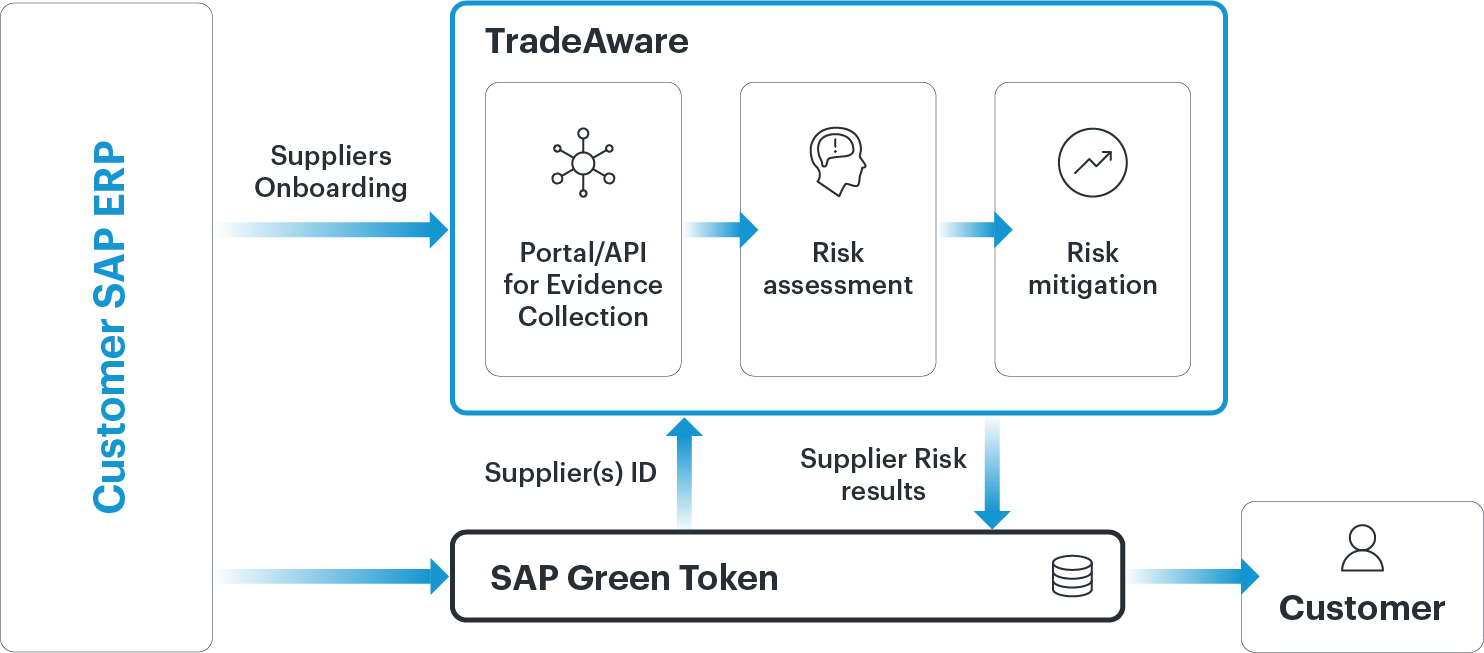
Westernacher offers a standard integration between SAP S/4HANA, SAP Green Token and LiveEO TradeAware to exchange all relevant supplier information and geolocation information needed to serve DDS and risk assessment purposes connected to EUDR.
TM Insights
Westernacher offers an interactive dashboard that provides transparency of transport operations and a full set of real-time, transport related sustainability KPIs such as emissions by carrier by combining SAP Transportation Management (SAP TM) with SAP Analytics Cloud.
Scenario
simulations in SAC
simulations in SAC
Using SAP Analytics Cloud (SAC) business strategy and sustainability initiatives can be linked by using smart decision-making and integration of sustainability targets into planning processes.
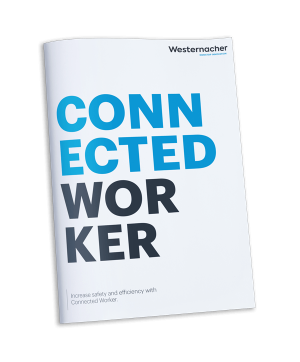
Connected Worker
Connected Worker increases safety workers and the efficiency while ensuring compliance at all times supported by SAP IoT as the technology platform. SAP IoT as a basis allows real time monitoring of their safety and compliance by leveraging information for SAP back end systems such as Plant Maintenance, EHS and brining this into context with data from IoT and mobile devices.
SAP
The diagram illustrates a potential system architecture for managing sustainability-related data using SAP solutions. It highlights the interaction between tools supporting data collection and calculation and those used for reporting and steering. While the diagram separates these two layers conceptually, the boundaries are often fluid. Many SAP tools, such as SAP S/4HANA Cloud or SAP Sustainability Footprint Management, serve both purposes by collecting, processing, and visualizing ESG and financial data. The setup can be tailored to meet your company’s reporting needs and integration requirements.

Osapiens
One central suite covering all sustainability regulations ensuring full transparency and audit proof is a central requirement for many companies. Osapiens Hub offers an integrated suite which shares a common data landscape and is covering all regulations companies across various industries in the European Union need to deal with already today or in the upcoming future like CSRD, CSDD, CBAM or EUDR.
osapiens HUB for
CSRD
Corporate Sustainability Directive
Corporate Sustainability Directive
EU Taxonomy
EU Taxonomy Regulations
EU Taxonomy Regulations
CBAM
Carbon Border Adjustment Mechanism
Carbon Border Adjustment Mechanism
ESG reporting
EUDR
EU Deforestation Regulation
EU Deforestation Regulation
CSDDD
Corporate Sustainability Due Diligence Directive
Corporate Sustainability Due Diligence Directive
LKSG
Lieferkettensorgfaltpflichtgesetz
Lieferkettensorgfaltpflichtgesetz
NTA
NIS2
Whistleblower
CBAM
Due diligence
CCF
Corporate Carbon Footprint
Corporate Carbon Footprint
PCF
Product Carbon Footprint
Product Carbon Footprint
XDC
X-Degree Compability
X-Degree Compability
Carbon footprint
PCB
Product Compliance Browser
Product Compliance Browser
DPP
GPSR
Product Safety Regulation
Product Safety Regulation
Medical Devices
BYRD Health
BYRD Health
Product compliance
Track & Trace Food
Food Tracking
Food Tracking
TPD
Tobacco Products Directive
Brand Protection
Traceability
Maintenance
Computerized Maintenance Management
Computerized Maintenance Management
Service
Field Service Management
Field Service Management
Distribution
Last Mile Delivery
Last Mile Delivery
Operations efficiency
ESG reporting
Due diligence
Carbon footprint
Product compliance
Traceability
Operations efficiency
LiveEO
To comply with EU Deforestation Free Product Regulation (EUDR) companies need gather information about their supply chain (Article 9) and perform a risk assessment and mitigate risks (Articles 10, 11).
LiveEO TradeAware is able to create origin- and geolocation maps, as well as perform a risk analysis for potential deforestation. Westernacher is partnering with LiveEO and provides a standard integration SAP ECC, SAP S/4HANA and SAP Green Token.
LiveEO TradeAware is able to create origin- and geolocation maps, as well as perform a risk analysis for potential deforestation. Westernacher is partnering with LiveEO and provides a standard integration SAP ECC, SAP S/4HANA and SAP Green Token.
Evidence collection
Collects deforestation
and legal evidence
and legal evidence
Article 9
Risk assessment
Provides compiled risk assessment information
Article 10
Risk mitigation
Ability to track risk mitigation actions
Article 11
Shipment information
Generate due
diligence statement
diligence statement
Article 9
TradeAware
Innovation meets integration.
White paper.

Sustainability roadmap with an integrated planning solution.
Sustainability Analytics: How to set up a Corporate Carbon Footprint with SAP S/4HANA and SAC. – Part 1
Sustainability Analytics: How to create your carbon footprint monitor. – Part 2
Sustainability Analytics: How to integrate the reporting and planning of your carbon emissions into your company. – Part 3
FAQs.
ESG Reporting refers to the disclosure of Environmental, Social, and Governance (ESG) metrics. Companies use ESG reports to provide transparency to investors, customers, business partners, and regulatory authorities regarding their sustainability performance.
The Corporate Sustainability Reporting Directive (CSRD) expands sustainability reporting requirements across the European Union. Whether a company is affected depends on factors such as company size, revenue, employee count, and regulatory obligations.
SAP solutions help organizations collect, consolidate, and analyze sustainability data. This enables companies to manage ESG metrics efficiently and create reports that align with regulatory requirements and sustainability frameworks.
SAP Sustainability Control Tower is a solution that enables organizations to centrally manage, monitor, and analyze ESG data. It provides transparency into sustainability performance and supports data-driven decision-making.
SAP Sustainability Footprint Management helps organizations calculate Product Carbon Footprints (PCF) and Corporate Carbon Footprints (CCF). This provides greater visibility into emissions across the entire value chain and supports decarbonization initiatives.
A Product Carbon Footprint measures the greenhouse gas emissions generated throughout a product’s lifecycle. It helps organizations understand the environmental impact of individual products and identify opportunities for emission reductions.
Scope 3 emissions include indirect emissions that occur throughout a company’s value chain. These emissions are typically calculated using supplier, procurement, logistics, and operational data combined with appropriate emission factors.
Scope 3 emissions include indirect emissions that occur throughout a company’s value chain. These emissions are typically calculated using supplier, procurement, logistics, and operational data combined with appropriate emission factors.
SAP provides transparency across suppliers, materials, logistics processes, and carbon emissions. This helps organizations reduce ESG risks, improve compliance, and build more sustainable and resilient supply chains.
The German Supply Chain Due Diligence Act (LkSG) requires companies to identify, assess, and mitigate human rights and environmental risks within their supply chains. The regulation aims to promote responsible business practices and greater transparency.
The EU Deforestation Regulation (EUDR) requires companies to demonstrate that certain commodities and products are not linked to deforestation or forest degradation. Transparent and traceable supply chains are essential for compliance.
A Digital Product Passport contains information about a product’s materials, origin, sustainability attributes, and circularity. It improves transparency throughout the product lifecycle and supports sustainability and regulatory objectives.